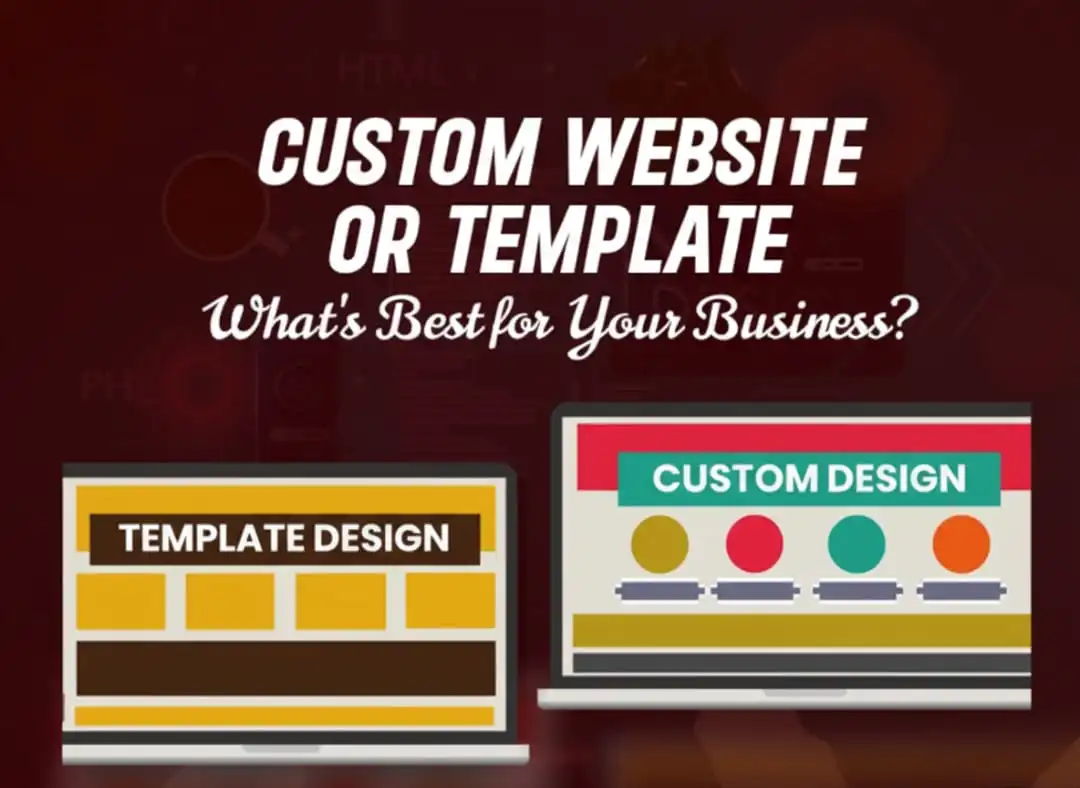
Choosing between custom web design vs website templates is one of the first, and most important, decisions any business makes when building an online presence. The right choice affects branding, user experience, search performance, cost, and future growth. Below is a practical, scannable guide to help you decide which path fits your business today and where you want to go tomorrow.
Quick Snapshot | What We Are Comparing
- Website template (template website): Pre-built layout you adapt. Fast, affordable, and many options.
- Custom website (custom web design): Built from scratch to match your brand, goals, and technical needs.
- Responsive website templates vs custom design: Both can be mobile-friendly, but they differ in how tailored that responsiveness is.
Why This Choice Matters
- First impressions are made in seconds.
- Your site must reflect your brand, convert visitors, and scale with your business.
- The decision affects cost now and maintenance later.
- SEO, speed, and security are directly impacted by design choices.
What Is a Website Template?
- Pre-designed pages and layouts you purchase or download.
- Often comes with demo content that you swap for your own.
- Typically works with website builders or CMS platforms (e.g., WordPress, Shopify, Wix).
Pros:
- Quick launch.
- Lower upfront cost.
- Lots of visual choices.
Cons:
- Less uniqueness.
- Possible bloat from unused features.
- Limited flexibility for unusual functionality.
What Is a Custom Website?
- Built from the ground up for your brand and goals.
- Designers and developers create bespoke visuals, interactions, and backend logic.
Pros:
- Unique brand expression.
- Tailored performance and SEO.
- Easier to scale with complex features.
Cons:
- Higher initial investment.
- Longer development timeline.
- Requires clear planning to avoid scope creep.
Template website vs custom website: side-by-side differences
Here’s a quick breakdown of how a template website vs a custom website compares across the factors that matter most to businesses:
Feature | Website Template | Custom Website |
Design Flexibility | Limited to pre-built layouts and settings. | Fully tailored to your brand and goals. |
Time to Launch | Quick setup – days to weeks. | Longer timeline, weeks to months. |
Cost | Low upfront (theme + hosting). | Higher initial investment (design + dev). |
Brand Identity | It may look similar to competitors. | Unique, memorable, and brand-specific. |
User Experience (UX) | Generalized UX, not industry-specific. | Tailored UX optimized for your audience. |
Scalability | Harder to scale with complex features. | Built to grow with your business. |
Mobile Responsiveness | Usually built-in, but generic. | Custom-optimized for mobile flows. |
SEO Potential | Basic, limited customization. | Full SEO flexibility (speed, markup, schema). |
Security | Depends on the platform and plugins. | It can be built with stronger, custom security. |
Maintenance | Easier DIY updates, but risk with plugin/theme conflicts. | Requires developer support, but is more stable long-term. |
Responsive Website Templates Vs Custom Design | Which Is Better For Mobile?
Both website templates and custom designs can be mobile-friendly, but they serve different purposes. Here’s how responsive website templates vs custom design compare when it comes to mobile experience:
Factor | Responsive Website Templates | Custom Design |
Mobile Readiness | Pre-built responsive layouts adjust automatically to devices. | Hand-crafted responsiveness tailored to specific screen sizes and user flows. |
User Experience | Generic mobile UX, suitable for most basic needs. | Optimized mobile journey with brand-specific interactions. |
Customization | Limited flexibility — harder to change mobile layouts deeply. | Full control over mobile interface, features, and usability. |
Performance | May include unused code/features, slightly slowing mobile speed. | Optimized code ensures faster load times on all devices. |
Consistency Across Devices | Works fine on most devices but may not be pixel-perfect everywhere. | Designed and tested for a consistent brand experience across all devices. |
Cost | Included in the template price. | Requires additional time and cost for custom coding. |
Best For | Startups, small businesses, blogs, or simple eCommerce stores. | Brands prioritizing conversions, user flow, or app-like mobile experiences. |
SEO impact: template website vs custom website
The choice between a template website and vs custom website has a direct effect on SEO performance. Here’s how they stack up:
SEO Factor | Website Template | Custom Website |
Site Speed | May include extra code or plugins that slow performance. | Optimized from the ground up for speed and clean coding. |
Mobile Optimization | Responsive but generic; may not fit brand-specific needs. | Custom-tailored mobile UX boosts SEO and conversions. |
Structured Data & Schema | Limited ability to implement advanced schema. | Full flexibility to add custom structured data for rich results. |
Crawlability | Depending on the theme structure, it can create indexing issues. | Designed for optimal crawlability and clean site architecture. |
On-Page SEO Control | Restricted to template settings and plugin features. | Complete freedom to implement advanced SEO strategies. |
Long-Term Scalability | Can hit limits as your SEO needs grow. | Scales with your business and SEO strategy. |
Security Impact on SEO | Vulnerabilities in plugins may harm SEO rankings. | Custom security measures reduce SEO risks. |
Cost and ROI – What To Expect
Template website costs
- Template/theme purchase: often $0–$100 one-time (or subscription).
- Hosting: low to moderate monthly fees.
- Setup and minor customizations: small developer/designer fees.
- Good ROI if you need a fast launch and low ongoing costs.
Custom website costs
- Design + development: higher upfront (varies widely).
- Testing, QA, integrations: additional costs.
- Maintenance or retainer: plan for ongoing investment.
Better ROI for businesses that rely on the site for significant revenue, brand differentiation, or proprietary features.
Who Should Choose What?
Pick a website template if:
- You are a small business, startup, or solopreneur with a limited budget.
- You need to launch quickly and validate the idea.
- Your site has straightforward needs (blog, brochure, simple shop).
Choose a custom website if:
- Brand distinction and UX are core to your conversion strategy.
- You require custom functionality, integrations, or advanced SEO.
- You plan to scale, expand product offerings, or need unique workflows.
Practical Checklist To Decide Right Now
- Define your primary goal (brand, leads, sales, content).
- List non-negotiable features (e.g., multi-language, bookings, integrations).
- Set a realistic budget and timeline.
- Consider future needs, will you pivot or scale?
- Ask vendors for performance and SEO examples (load times, case studies).
- If unsure, start with a template and plan a phased custom upgrade.
What We Get!
The choice between custom web design vs website templates comes down to business goals, budget, timeline, and long-term strategy. Templates offer speed and affordability; custom websites offer distinction, control, and scalability.
There’s no single “best” for everyone, only the best for your business right now. If your priority is rapid launch and cost-efficiency, a template website makes sense. If your priority is brand, advanced SEO, and tailored user experience, a custom website is the better investment.Need help deciding? NJ Softlab guides businesses through the decision, from fast template launches to enterprise-grade custom websites. Reach us out at NJ SOFTLAB for a tailored consultation and make the choice that grows your business